Work with slope, not against it.
Smaller building forms, considered paths and stepped outdoor rooms are imagined to respond to contours and reduce the sense of a single dominant structure.
A landscape-led design study
This unofficial concept asks a simple question: what might hospitality feel like if the hills, rain, shade and local texture led every design decision?
The concept vision
The creative direction imagines a hill retreat that feels calm rather than imposing. Buildings would follow the terrain in smaller volumes, views would be revealed gradually, and shared spaces would encourage people to pause between forest edge and open sky.
It is a speculative hospitality and design exercise only. No site ownership, development approval, brand affiliation, completed construction or current operation is represented.
“The landscape is not a backdrop to the experience. In this concept, it is the starting point.”
Design principles
These principles express design intent. Their technical, social and environmental performance would need to be tested through consultation, surveys, approvals and detailed design.
Smaller building forms, considered paths and stepped outdoor rooms are imagined to respond to contours and reduce the sense of a single dominant structure.
Windows, terraces and shaded thresholds would be positioned to frame landscape and daylight while giving interiors a grounded, sheltered character.
Deep overhangs, covered walks, cross-ventilation studies and protected gathering spaces are proposed as early responses to warmth, humidity and seasonal rain.
The experience would move between private rooms, intimate overlooks and social courtyards, supporting quiet stays, family time and focused group gatherings.
A grounded material language
The palette imagines tactile, repairable finishes and a warm relationship between indoors and out. Final sourcing would depend on responsible procurement, technical suitability, craft consultation and local availability.
Material intent
Material decisions would aim to avoid visual excess, support maintainability and invite local knowledge into the detail. These are design aspirations, not verified supply-chain or performance claims.
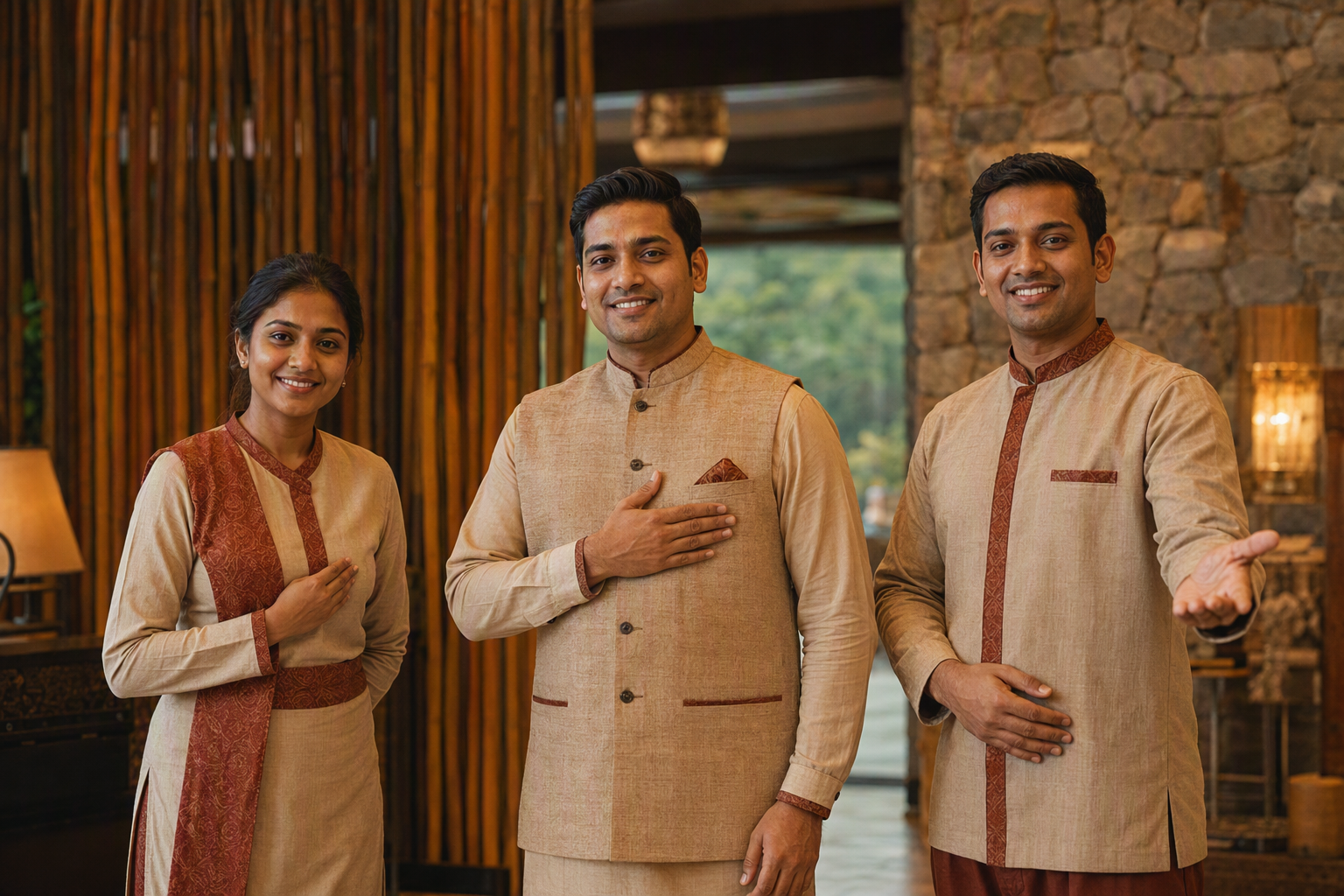
The human welcome
The service idea centres on thoughtful guidance rather than formality: a clear arrival, useful knowledge of the surrounding region, care for individual needs and a genuine sense of ease.
The people pictured are illustrative. There is no recruited team or current employer represented by this concept. Any future staffing approach should prioritise fair work, meaningful training, local opportunity, cultural respect and safe working conditions.
Responsible-development intent
A credible project would need evidence, participation and transparent reporting. This concept holds space for that work without claiming certification or achieved outcomes.
Any real proposal should begin with meaningful engagement with relevant communities, local authorities, cultural knowledge holders and environmental specialists.
Land, water, biodiversity, traffic, energy, waste, livelihoods and climate risk would require independent study and clear mitigation before development decisions.
Targets should be specific, measurable and publicly accountable. No sustainability rating, certification, carbon claim or environmental approval is asserted here.
Continue the story
Explore imagined celebrations and retreats, or share a thoughtful question about the design study.